 Payment



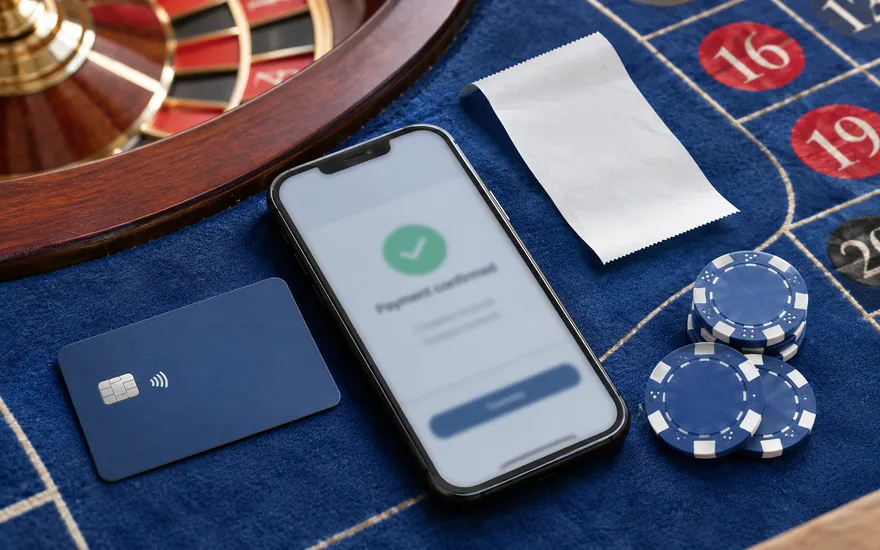
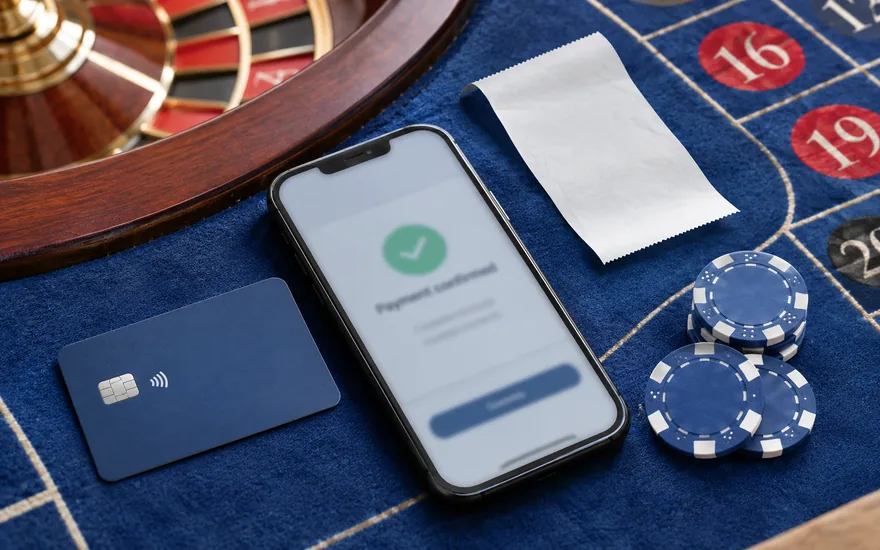
A familiar payment logo leaves several things to check: who operates the account, whether money can be withdrawn through that route, and what it costs to reach your bank. The guides below explain how to find those answers in the relevant records and instructions.
On this page
- Start with the account and the destination
- Put deposit and withdrawal in separate columns
- Know what each payment product actually does
- Read the amount in its own currency
- Treat fees as separate decisions
- Keep three different records apart
- Read the game's settlement rule as carefully as the cashier
- Stop when the checks do not fit
- Build a payment note that answers one task
- Separate a payment product from the device displaying it
- Read a payment route as a chain of separate instructions
- Match the account holder before comparing payment speed
- Record the quotation before the confirmation changes
- Use a round-trip cost example without predicting a return
- Know which balance a screen is showing
- Separate a payout request from its release and receipt
- When a deposit does not appear, trace before repeating
- Read a returned transfer differently from a new payout
- Treat card replacement as a record-matching task
- Keep manual bank details tied to their current instruction
- Understand why account access and payment access can differ
- Compare exact minima with routes that merely accept the amount
- Read promotional conditions without treating them as cash
- Distinguish direct crypto settlement from converted pounds
- Link the game result to the total stake actually committed
- Read slot features as a sequence rather than a picture
- Keep an illustrative round separate from a probability claim
- Choose evidence that another person can understand
- Keep a correction about the claim actually published
- Decide what information is safe to keep locally
- Plan an endpoint before a confusing payment becomes another payment
- Use controls without searching for a workaround
- Return to the exact guide when a condition changes
- Questions before the first payment
- Compare a documented deposit amount or payment type
- Sources and review
Start with the account and the destination
Check the exact business and website against the Gambling Commission's public register. A wallet provider's payment authorisation and a gambling operator's licence describe different activities. One cannot substitute for the other.
Then look at the cashier for your own country and account currency. A general marketing page may describe another regional edition. A method visible before sign-in can also be unavailable after account checks. Do not send money to bank details supplied by an unsolicited message.
Age and identity checks are part of GB online gambling. The Commission explains that operators must verify age and identity before gambling, although additional information can be required later. A payment that authenticates successfully does not complete every account check.
Put deposit and withdrawal in separate columns
A deposit button answers an incoming-payment question. It does not tell you that the same route can receive a payout. Ask which destination is permitted, whose name it must carry and whether that destination requires a previous deposit.
The wallet guide explains where a stored balance sits and how it differs from a phone's saved card. With carrier billing, a charge may appear on a phone bill even though cashing out requires another destination. Follow where the money goes, rather than grouping these products by the logos in a cashier.
Know what each payment product actually does
An electronic-money wallet can sit between the bank and the operator. Funding the wallet, paying the merchant and withdrawing from the wallet are separate transactions. Check the cost and eligibility of each stage rather than reading only the casino's fee statement.
Apple Pay and Google Pay commonly present a saved payment card at checkout. That does not create a separate pot of gambling money inside the phone. The underlying eligible debit card, the operator's integration and the available payout route still matter.
Revolut Pay is a named checkout product. Typing the details of a Revolut debit card is a different route. Likewise, entering a beneficiary and reference for a manual bank transfer is different from authorising a bank-connected checkout.
Read the amount in its own currency
Write down the cashier currency before comparing minimums. A number copied from a euro edition is not a sterling limit. If your funding account uses another currency, establish who converts the money and which quotation applies to that particular transfer.
The minimum withdrawal guide explains why a deposit minimum cannot answer a cash-out question. It also separates withdrawing your own money from bonus conditions. Adding money or making more bets simply to reach a displayed threshold is not a sensible default solution.
A useful comparison follows a round trip. For example, a hypothetical £30 payment and a later £12 return involve two directions and possibly a wallet-to-bank step. The example describes records to check; it does not predict a return from gambling.
Treat fees as separate decisions
The operator can apply one set of charges while the wallet or bank applies another. A statement that deposits are free at a casino does not establish that funding an external wallet is free. Currency conversion can also change the amount received.
Review the final quotation before authorising a transaction. Keep its currency, amount and fee together. Comparing only a percentage without a minimum charge or conversion basis can produce the wrong result, especially for small payments.
Avoid repeated attempts while a payment's status is unclear. Another tap may create another authorisation rather than repair the first. Ask the relevant provider to identify the existing reference before deciding whether any further action is appropriate.
Keep three different records apart
Before the first transfer, locate the account's help and complaints routes while you can read them without urgency. Save the official support address through the provider's own website. A search advertisement or message arriving after a problem may lead somewhere else.
Keep a dated copy of the relevant payment instructions rather than an entire folder of unrelated promotions. The useful evidence identifies the method, currency, permitted destination and source. If those conditions change later, that small record can explain which instruction you actually followed.
Do not put credentials into the record. A payment reference can help support trace money without revealing a login password or a one-time code. Clear records and account security should support each other rather than creating another place where secrets are stored.
Your bank, payment provider and gambling account each show their own part of the transaction. Their records may appear at different times. To find a missing credit, compare what each one says about the same amount and reference; a screenshot of the bank alone cannot tell you what the operator has credited.
Our bank statement guide explains merchant descriptions, pending entries and posted records. Use amount, date, currency and transaction reference together. A short merchant label alone is weak evidence of which casino account received a payment.
If money has left the bank but the operator cannot identify it, request a trace of that existing payment. Preserve the original message and any case number. Share evidence only through the provider's verified support channel, with unrelated personal information removed.
Read the game's settlement rule as carefully as the cashier
Payment literacy also means understanding what a game credits back. In commission baccarat, the winning profit and returned stake are different figures. In blackjack, a soft 17 rule governs dealer behaviour rather than the payout for a natural blackjack.
For slots, paylines and ways describe how a combination qualifies. Wild and scatter symbols perform different jobs. Neither a larger ways count nor a brighter feature animation establishes that a session will return more money.
A progressive jackpot requires its own eligibility rules. A growing display is not a deadline or a promise. Read the version actually offered rather than borrowing conditions from another game with a similar name.
Stop when the checks do not fit
A missing method, a protected bank block or an exclusion is not a reason to search for a workaround. If gambling is becoming difficult to control, stop the payment process and use the independent support routes instead.
Keep essential spending separate from any discretionary gambling budget. Payment speed does not reduce the risk of loss. A route that is easy to fund can still make spending hard to monitor, particularly when a phone bill arrives later.
You can also use self-exclusion alongside other support. Different tools cover different settings. Protecting access to money and reducing access to gambling can be complementary decisions rather than competing alternatives.
Build a payment note that answers one task
Start a private note with a sentence describing the action you are considering. “Move an existing wallet balance to my bank” is more precise than “use a casino wallet”. The first sentence identifies a starting balance and destination. The second could describe several unrelated transfers.
Give the note a date and keep the product name exactly as the provider writes it. Record whether you are reading a public help page, a signed-in cashier or a message about an existing transaction. These sources answer different questions, even when their colour and logo look similar.
Keep the note small enough to use. A page of relevant instructions is easier to check than dozens of promotional screenshots. Include the source address, payment direction, account currency and unresolved question. Leave passwords, security codes and full account numbers out of the document.
If you are only researching, stop at that stage. You do not need to make a deposit to learn the difference between a wallet payment and a bank transfer. The payment index gives each task its own guide so you can read the relevant route without opening an account.
Separate a payment product from the device displaying it
A phone can display a debit-card checkout, an electronic-money wallet, a bank authorisation screen or a carrier-billing instruction. The device does not tell you which product is moving money. Read the named method and the organisation that will hold the transaction record.
For a saved-card checkout, identify the underlying card without copying its full details into a reading note. For a wallet, identify whether there is a separate balance. For a phone-bill charge, identify the mobile account responsible for the bill. Each creates a different spending record.
This distinction becomes useful when asking about a return. A support agent may need the card-payment record rather than the name of the phone. A wallet may have its own withdrawal instruction after receiving money from a merchant. A telephone bill does not automatically become a payout account.
Our Apple Pay explanation and Google Pay explanation keep the saved-card question separate from merchant payout support. The phone-bill guide addresses carrier charges. Choose the article matching the actual product rather than the device in your hand.
Read a payment route as a chain of separate instructions
Imagine an ordinary bank account funding an external wallet, followed by a wallet payment to a merchant. There are at least two instructions to identify. A later return to the wallet and subsequent withdrawal to the bank would create two more. None is proved by a record of another.
Give each instruction its own line. Note where it starts, where it is intended to arrive and which organisation supplied the reference. A single label such as “withdrawal completed” can otherwise hide whether the money reached the wallet or the bank at the end of the chain.
Do not add these lines together as if they were independent losses. Money moving between accounts can appear several times in transaction histories. Reconciliation follows the same amount through its stages and accounts for any documented fee or conversion. It does not count every debit as a new purchase.
The NETELLER bank-withdrawal guide starts with an existing wallet balance. It is deliberately separate from the guide to NETELLER casino payments. Reading them together explains the route while preserving the boundary between the merchant instruction and the later bank transfer.
Match the account holder before comparing payment speed
Read the account-ownership requirement in the relevant instructions. A method that belongs to another person introduces a different problem from a slow transfer. A household relationship or shared address does not, by itself, establish that a particular payment account satisfies the provider's conditions.
If a name has changed, use the provider's official process to understand what evidence is appropriate. Do not make repeated payments under different name spellings to discover which one is accepted. That creates additional transactions without resolving the ownership question behind the original instruction.
Also distinguish an account label from its verified owner. A nickname displayed on a phone is not necessarily the name held by a bank or wallet. A support request should describe the mismatch clearly while leaving sensitive identity documents inside the organisation's verified submission channel.
Ask the organisation handling the account which ownership documents it needs. Requirements can vary, so a general checklist cannot supply a universal document list. Keep the request, its date and the official submission route together. A password or one-time payment code is never evidence to include in that reply.
Record the quotation before the confirmation changes
A confirmation screen can summarise an amount, currency, fee and destination. Read those fields together before authorising. If the quotation differs from the amount you intended to send, do not rely on a later transaction history to reconstruct what the earlier screen might have said.
For a hypothetical transfer, an instruction to send £20 and a statement debit of £21 need an explanation for the additional pound. It might relate to a separately documented charge, but the difference alone does not identify its cause. Ask for the transaction's actual breakdown.
Conversion adds another comparison. The amount leaving one account and the amount entering another may use different currencies. Keep both units attached to their numbers. Writing only “20” and “23” removes the information needed to decide whether the records describe the same instruction.
Our comparisons distinguish an amount accepted by a route from a promise about what happens afterwards. A £10 deposit floor does not settle the withdrawal threshold, a fee quote or bonus eligibility. Each remains a separate condition with its own source.
Use a round-trip cost example without predicting a return
Suppose a hypothetical payment instruction sends £25 to a merchant and a later, separate instruction returns £10. Those numbers describe two transfers for accounting practice. They do not imply that gambling will produce a £10 return, or that this pattern is available at a particular operator.
Now imagine a documented external-wallet fee of £1 on the later bank transfer. The final receipt would need to be reconciled with that fee. This is an arithmetic example, not a published wallet tariff. A real decision needs the quotation supplied for the actual account.
Work through the charges in order, attaching each one to the transfer that incurred it. Check whether a fee was taken before the money arrived or debited separately from the account. That avoids counting the same charge twice and shows exactly which difference still needs an explanation from the provider.
You can apply this reading method to a small or large instruction without changing the rule. A smaller payment does not remove the need to identify the outgoing route. It can make a fixed charge more noticeable, which is a reason to read the quote rather than assume it.
Know which balance a screen is showing
The balance at your bank, a wallet's available balance and a merchant's gambling balance are separate records. They may also contain entries that are not immediately available for another transfer. Read the label attached to the balance before treating it as money already received elsewhere.
A pending authorisation can look like money already spent, although the bank is showing a reservation. The merchant's history may use a different status for the same instruction. Copy both labels into your note and check the recipient's record before describing the payment as a completed credit. Otherwise the note loses the very uncertainty you need support to resolve.
At a gambling account, distinguish cash from any separately labelled promotional balance. An advertised amount is not automatically withdrawable money. This site does not supply a universal wagering formula because no single formula describes every offer, product and account condition.
If a support conversation uses the word “balance”, ask which account and which category it means. That single clarification can prevent a discussion about wallet receipt from being mistaken for a statement about cash available at the bank.
Separate a payout request from its release and receipt
A withdrawal request records what you asked the operator to do. Release records a later action by the organisation sending the payment. Receipt describes what the destination account has recorded. These are distinct stages even when a simplified status label makes them look like one event.
Do not assign a duration to an unknown stage. The speed advertised by a payment network does not identify how long an operator will review an account or when a receiving institution will display a credit. A meaningful enquiry asks which stage the particular instruction has reached.
Keep the original request identifier, any release reference and the destination's receipt record separately. If the amount changes, retain the explanation linking the two figures. A single cropped screenshot that omits the method or currency is often too ambiguous to trace the whole route.
For a card payout, an ARN enquiry concerns a tracing reference associated with the card-payment route. It is not a reason to rename every casino request number as an ARN. Ask the sending organisation what reference it can actually supply.
When a deposit does not appear, trace before repeating
First establish whether the funding account shows an instruction, a reservation, a posted debit or no record at all. Save the exact status wording without upgrading it to a stronger claim. The next useful question depends on which of those states is documented.
Then check the merchant account's payment history for the same amount and currency. A missing balance update and a rejected payment message are different observations. Report what is visible rather than combining them into a guess that money is definitely lost or definitely on its way.
Contact the organisation responsible for the missing link using the official route you located independently. Describe one existing instruction, its time, reference and intended destination. Do not include a security code, and do not create another payment merely to make a support conversation easier to explain.
If you discover an unrecognised instruction, use the bank or provider's appropriate security process rather than the ordinary “where is my deposit” route. This guide cannot classify a disputed transaction from a screenshot, but it can help keep the evidence and the question precise.
Read a returned transfer differently from a new payout
A returned payment may refer to money sent back after an instruction could not complete. It is not automatically a new withdrawal from gambling funds. Ask which original instruction the return belongs to and whether the provider supplies a reference connecting the two records.
Use the original currency as well as the returned amount. If conversion occurred on the outward or return stage, a difference requires a documented explanation. Do not label the entire difference as a casino fee when the records do not establish who applied it.
A rejected destination also needs its own explanation. An outdated account detail, an ownership check or an unsupported route would call for different action. These are possible categories to ask about, not a diagnosis of a real transfer and not permission to try substitute accounts.
Keep the original case open in your private notes until the organisation explains its status. Starting a new enquiry with no reference to the previous instruction can leave two conversations describing one event. A concise chronology helps the provider see what still needs answering.

Treat card replacement as a record-matching task
A renewed or replaced card can make a saved checkout look different from an older receipt. The visible digits on a device may also differ from the details printed on a physical card. Do not assume a mismatch proves that the payment reached an unrelated account.
Ask the relevant organisation how it identifies the previous instruction and what current destination is permitted. Provide only the masked details it requests through its verified channel. A reading note should never contain a full card number, security code or a photograph revealing both sides.
Separate the reason a card changed from the payment question. Expiry, loss and an account closure are different circumstances. Tell support which circumstance applies, but let the bank or operator explain the available route rather than constructing a workaround from a general help article.
The bank-statement guide explains why merchant descriptions and references belong alongside masked account details. A familiar logo or the last few digits alone may not connect every stage. Amount, date, currency and the provider's own reference make the enquiry more specific.
Keep manual bank details tied to their current instruction
A manual transfer requires a beneficiary and often a customer reference. Copying an old set of details from a previous message can miss a changed instruction. Read the current official cashier information for the account and avoid details supplied through unsolicited contact.
The payment reference is not decorative text. Where instructions require a customer identifier, an omitted or altered reference can affect how the recipient associates a bank payment with an account. Preserve the reference exactly as supplied, without adding a personal message in the same field.
Before confirming, compare the intended amount and currency with the bank's authorisation screen. If a warning appears, read the bank's explanation and follow its official process. Do not treat a general casino article as authority to dismiss a bank security message.
Use the manual bank-transfer guide when you have been given beneficiary details and a reference to enter. A bank-connected checkout can take you through a different sequence. Check its own authorisation screen and return instructions, even though both routes begin at a bank account.
Understand why account access and payment access can differ
Being able to sign in does not prove that every method is available. A product can have country, account or funding restrictions described in its own documentation. Likewise, seeing a wallet's public website does not establish that a new account can currently be opened in your location.
The MuchBetter guide preserves the provider's documented distinction between current UK registration availability and existing-account conditions. That is a better question to ask than whether a historic casino list still contains the logo. An older list may omit the relevant account restriction entirely.
The Payz guide separates a documented wallet contract from unconfirmed merchant acceptance. A wallet may exist without a particular casino accepting it. A payment provider's general capabilities are not a substitute for an actual current cashier route.
Use a missing option as a reason to read the account-specific explanation. Do not open alternative identities, change location information or borrow another person's account to make a method appear. Those actions do not resolve the original eligibility question.
Compare exact minima with routes that merely accept the amount
An exact minimum of £10 and a minimum of £1 can both describe routes on which a hypothetical £10 instruction is possible. They are still different categories. A comparison should say whether it is selecting an exact floor or simply checking that an amount is accepted.
This distinction prevents a misleading top list. Grouping every route that accepts £10 under “£10 minimum” would change the meaning of the source. Our comparison keeps the published floor attached to the named method rather than rewriting it to fit a convenient heading.
A deposit floor also belongs to its own direction. A withdrawal threshold, a minimum stake and a promotional qualifying amount can all use pounds while answering different questions. Matching currency does not make those values interchangeable, and a table should label each one explicitly.
Read the £1 route comparison for a smaller-floor task and the £10 comparison for the separate classification. Neither asks you to top up a balance simply to satisfy an outgoing threshold. The decision can remain a reading task.
Read promotional conditions without treating them as cash
A percentage headline describes only one part of an offer. It does not, on its own, state the eligible deposit methods, the treatment of returned deposits, any wagering condition or the amount that could eventually be withdrawn. Each condition requires the actual terms for that offer.
Identify which balance is affected before applying a calculation. A hypothetical requirement based on deposit plus bonus would differ from one based only on a bonus. This guide does not assign either formula to an operator without a source specifying the basis.
Also separate qualifying payment rules from game rules. A payment method might be subject to its own eligibility condition while a game contributes under another condition. Knowing one rule does not supply the other. Read the date and applicable account edition alongside the text.
The reserved space above this guide is inactive: it has no offer, rating or destination to select. You can work through the payment checks below it without following a commercial link or sending money. Its presence supplies no information about a promotion or its conditions.
Distinguish direct crypto settlement from converted pounds
A direct asset transfer needs an explicitly supported asset, network and receiving instruction. Paying pounds after converting an asset elsewhere is another route. A card issued by a crypto-related company does not, by its name alone, turn an ordinary card payment into direct crypto acceptance.
Keep those stages apart in a comparison. An exchange record, a bank credit and a later merchant card payment identify separate events. Calling the entire sequence “a Bitcoin casino deposit” can conceal that the merchant received pounds rather than a direct on-chain transfer.
The crypto-method explanation does not name a current direct-accepting GB operator where evidence is insufficient. It explains the distinctions and records instead. An unsupported receiving route is not something to test by sending a small amount and hoping it arrives.
Do not generalise a network instruction between assets or between products. An address-looking string is not enough to identify an accepted route. The supported asset and network need to come from the relevant provider's current instructions, with no inference from a similar logo.
Link the game result to the total stake actually committed
A displayed chip value does not always equal the whole amount committed by a selection. A roulette call bet can place several units across different positions. Read the entire selection and its constituent chips before comparing the settlement to a single headline number.
The roulette call-bet guide separates those units and their coverage. Its arithmetic examples explain a rule, not a recommended bet. A result on one component does not establish the net result of all components committed in the same selection.
In baccarat, a winning payment may include returned stake as well as profit. Commission belongs to the stated winning-profit calculation under the conventional rule discussed in the guide. Read the commission explanation before treating the amount credited as profit alone.
For blackjack, soft 17 identifies a dealer-total rule. It is not a general payout percentage. The table-game index keeps these three tasks separate so an answer about card totals does not get applied to chip coverage or Banker commission.
Read slot features as a sequence rather than a picture
A slot screen can change several times within one paid round. A symbol may expand, a winning group may disappear or a feature counter may change. Reading only the final frame can lose the order that explains which symbols contributed to the result.
Start with the exact title and version, then identify the event that triggered the change. The slot library links ten separate game guides instead of treating similarly themed games as interchangeable. A scarab, book or wild symbol can perform different jobs in different titles.
The general guides to paylines and ways and wilds and scatters explain the vocabulary. They do not supply missing rules for a named game. Use the named article and its primary source to establish whether a particular substitution or trigger is documented.
The pictures illustrate the subject; they do not run a game. Where a provider demo has not been verified, the page uses a visual explanation of the rules. Read that block as an explanation of the documented sequence, with no expectation that selecting a photograph will launch the title.
Keep an illustrative round separate from a probability claim
An example can show how an already specified combination would be counted. It cannot establish how often that combination appears unless the underlying probability is known. A larger set of possible paths or a brighter feature screen does not provide that missing probability.
Likewise, a published RTP figure describes a statistical property of a defined game configuration. It is not a receipt for a short session, a schedule for a return or a guarantee that losses will reverse. The exact version matters when a provider publishes several configurations.
The same care applies to a jackpot meter. Its displayed growth does not state when a result is due. Our jackpot-structure guide separates a progressive pool, a fixed prize and the eligibility conditions attached to the game in question.
Keep these explanations out of a payment trace. If the issue is a missing bank credit, a game's feature probability does not identify the payment reference. Read the rule for a disputed settlement and the payment record for a disputed transfer, without merging the two enquiries.
Choose evidence that another person can understand
A useful chronology begins with the action you authorised and ends with the unanswered point. “I requested a return to my debit card; the operator supplied this release reference; my bank cannot identify receipt” is more actionable than a collection of unrelated balance screenshots.
Arrange the evidence by event, preserving the original timestamps and their time zones where displayed. Do not silently change a date to match another screen. If two systems label the same event differently, retain both labels and explain which organisation displayed each one.
Crop unrelated personal information while leaving the relevant method, amount, currency and reference readable through the verified support channel. A heavily cropped picture that removes every identifying detail can be as unhelpful as a full statement exposing transactions irrelevant to the enquiry.
Our contact guidance separates an editorial correction from a request to trace money. Payment Table GB can explain a distinction in a public document; it cannot inspect a private casino ledger, release a withdrawal or authenticate a bank customer.
Keep a correction about the claim actually published
If a guide appears inconsistent with a primary source, identify the precise sentence and source. State whether the difference concerns a product name, account country, payment direction, amount or review date. That lets an editor evaluate the claim without guessing which part you dispute.
An account-specific experience may reveal a point worth checking, but a broader change needs evidence that applies beyond that account. A revised public help page can also justify an update without a funded-account test. In either case, describe only the change the evidence supports and leave the rest of the claim open.
Under the editorial policy, an unconfirmed minimum, payout duration or version-specific feature stays unconfirmed. The article should tell you what is missing and where to check it. An estimated number would make the page look complete while leaving you with a less reliable answer to the payment question.
Images in this publication are editorial photographs and attributed provider material where identified. A picture of a phone or receipt does not prove that a particular product was tested. The source attached to the written claim remains the place to check its factual basis.
Decide what information is safe to keep locally
For an ordinary reading note, retain the public source address, review date and a short description of the question. You do not need a complete bank statement to remember that a wallet-to-bank transfer is separate from a merchant payout.
When a real transaction requires support, keep evidence in a place appropriate for sensitive financial information. This site provides no upload form for statements, identity documents or screenshots of your account. Do not mistake a browser reading window for a secure route to an operator's support team.
An official provider can explain what it needs and how to send it. Requests arriving through an unsolicited message should be checked independently through the organisation's own website. Never give a one-time code to someone claiming that it is required to trace an old transfer.
The privacy page describes the current reading site's behaviour. It distinguishes the local editorial experience from any external source you choose to open. Following a source link does not make the destination's account, contact form or privacy arrangements part of this site.
Plan an endpoint before a confusing payment becomes another payment
A payment enquiry should have a clear next action: locate an existing reference, ask the sending organisation for its status or ask the receiving organisation to identify a credit. Making another deposit is not a substitute for any of those actions.
Set aside the idea that a fresh transaction will reveal what happened to an old one. A second instruction can succeed while the first remains unresolved, or it can create another unresolved record. Either way, it does not supply the missing link in the original chain.
If you decide not to continue, preserve the relevant account-access and support information needed to ask about existing funds. Ending new gambling activity and resolving a past transfer are separate tasks. A decision to stop does not require a final bet.
Choose the guide that matches the next step: a method page for the route, an outgoing-record page for the reference, or a comparison for a published amount. Once it answers that question, you can close the note. Finishing a payment enquiry does not require reading every guide or making another transaction.
Use controls without searching for a workaround
A bank block, account restriction or exclusion can interrupt a payment route. Treat that interruption as a reason to stop and use the relevant official explanation. Trying another method simply to defeat the restriction does not answer the original payment question.
Independent gambling-support information is available without completing a casino registration. The site also explains self-exclusion coverage as a separate topic. Those pages distinguish tools and support routes rather than presenting a new account as the answer to an unwanted spending pattern.
For someone helping another adult, keep the practical question clear. You can read a public guide together without asking for their passwords or taking control of a payment account. The person or organisation responsible for an account must use its own verified support and security process.
Payment convenience should not decide whether spending is manageable. A rapid checkout still creates a financial commitment. If reading a route starts turning into a search for more ways to fund gambling, leave the cashier task and use the independent support section instead.
Return to the exact guide when a condition changes
A changed method name, bank account or game version is a reason to revisit the matching source. It is not a reason to assume that every statement on a previous screenshot still applies. Identify the changed field before comparing the old and new instructions.
The navigation separates Payments, Wallets, Slots and Game rules because these sections solve different tasks. The publication pages explain its method and limits. Every named guide has a dedicated address, so a saved link can return you to the specific question rather than an unrelated page.
Use the date beside a source as evidence of when it was reviewed, not a promise that a provider can never change its terms. A current account-specific quotation remains necessary for a real payment. This guide cannot see your cashier or approve an instruction for you.
Before closing the note, check that its unresolved question can be answered by the organisation you intend to contact. “Which reference identifies this released card payout?” is a finite enquiry. “Which casino always pays fastest?” asks for an unsupported guarantee that these records cannot establish.
Questions before the first payment
Does a payment logo prove that withdrawals are supported?
No. Check the outgoing cashier option separately and read any requirement for a previously used destination.
Does a fast payment service guarantee a fast casino payout?
No. Operator review, payment release and receipt by your bank are distinct stages.
Have you tested the payment routes with your own deposits?
No. These guides interpret public documentation. The editorial policy explains our sources and limitations.
Compare a documented deposit amount or payment type
The £1 deposit comparison checks a published smaller-floor route. The £10 comparison separates exact ten-pound minima from lower-floor alternatives, while the crypto payment explanation distinguishes direct asset settlement from conversion into pounds. Each answers a separate selection question.
The payment guide index brings the method explanations and two focused outgoing-record tasks together. Start with the product and direction, then follow the record belonging to that particular instruction.
The named-game slot library groups ten separate rule guides by studio and mechanism. Each keeps its published facts and feature sequence attached to the exact title.
Sources and review
Reviewed 10 November 2026. UKGC age and identity guidance, credit-card restrictions and withdrawing deposit funds underpin the relevant account checks.