 Payment



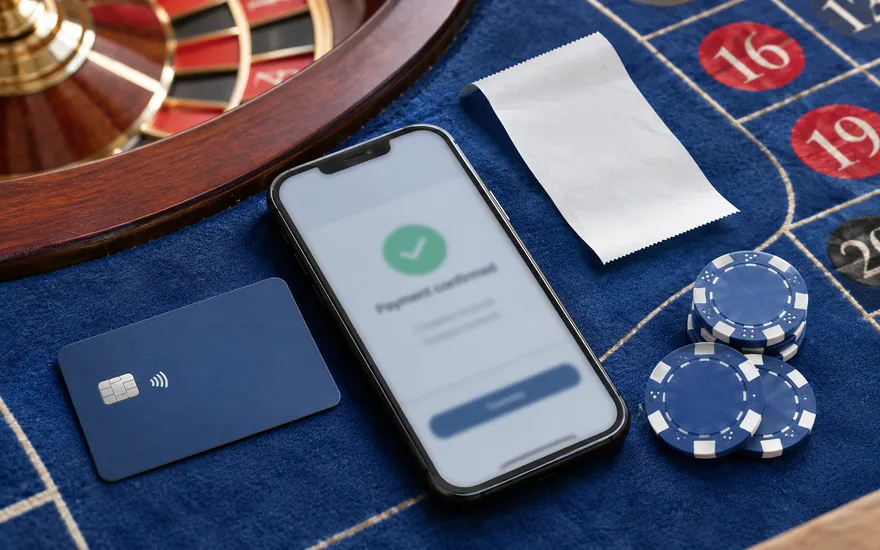
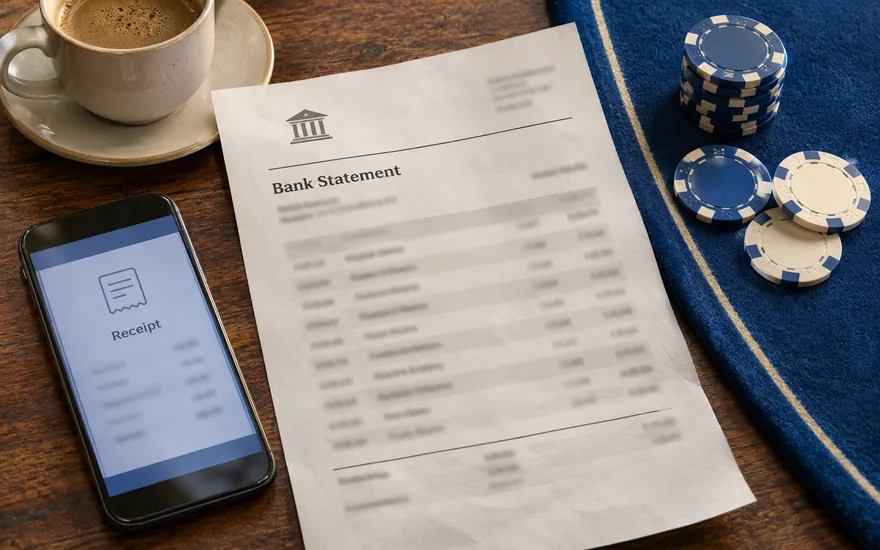
Start with the bank's entry and compare it with the merchant receipt. For a casino's internal history or an identity-document upload, use the relevant account instructions instead. Here the task is to identify what the external record represents, including an unfamiliar charge. Accurate matching also means keeping protective bank controls in place and describing authorised activity honestly.
On this page
- Begin with the event the bank has recorded
- Build a four-part match
- Follow an intermediary as a separate account
- Read a payout against the correct reference
- Treat an unrecognised charge as a security question
- Use the record to understand spending
- Separate a descriptor from a transaction identity
- Keep the bank's dates as labelled
- Read pending and posted entries without double counting
- Distinguish a new credit from an authorisation reversal
- Follow a wallet through the statement boundary
- Read card-backed phone payments at the underlying account
- Reconcile gross and net amounts in the original currencies
- Make a precise security enquiry
- Use consistent account boundaries for spending totals
- Keep the final match reviewable
- Keep a statement extract understandable
- Statement questions
- Sources and review
Begin with the event the bank has recorded
A pending card entry is not the same record as a final posted debit. A returned authorisation is not necessarily a separate payout. Read the bank's status description before adding every visible line to the total spent.
Your bank can explain how its own application displays authorisations, completed payments and reversals. The wording varies, so do not import an exact timeline from another bank's guide. Ask about the specific record and identifier you can see.
Keep a copy of the original merchant receipt. Compare the transaction currency as well as the sterling amount. Conversion can make the posted debit differ from the amount shown at a merchant, particularly when the two accounts use different currencies.
Build a four-part match
First compare the direction: money leaving or entering the account. Next compare amount and currency. Then compare the relevant dates, allowing for the distinction between an instruction date and a posting date. Finally use the reference to connect the bank entry with the provider's record.
| Field | Useful comparison | Common mistake |
|---|---|---|
| Direction | Debit, credit or reversal | Calling every credit a win |
| Amount | Gross request and net receipt | Ignoring a conversion or separate fee |
| Date | Authorisation, execution and posting | Expecting every system to share one date |
| Reference | Bank and provider identifiers | Using only the visible merchant label |
The description is supporting evidence rather than the entire match. A short or unfamiliar label should prompt a check, not an immediate assumption that money has vanished. Equally, a recognisable word is not proof that an unexpected charge is yours.
Follow an intermediary as a separate account
When a wallet sits between the bank and the casino, the bank may show the wallet transaction. The merchant payment can occur later within the wallet's own records. Those are distinct events and should not be merged just because the amounts happen to match.
For example, a hypothetical £30 wallet top-up and a £12 merchant payment do not represent £42 of casino deposits. The £12 may have come from the £30 already moved into the wallet. The remaining wallet balance still needs its own reconciliation.
The wallet guide explains the account boundary. NETELLER and Payz require the same basic distinction between funding a wallet, paying a merchant and transferring money back out.
Read a payout against the correct reference
An operator's withdrawal-request number can differ from the payment reference used by the bank. Ask whether the operator has approved the request or actually sent the payment. Once sent, request the trace information available for that specific outgoing route.
If the incoming bank label differs from the casino name, compare the amount, currency and reference before raising a missing-payment claim. A payment processor can be part of the route. The operator and bank should help establish the connection rather than asking you to guess.
For manual bank transfers, the beneficiary and customer reference are especially important. A bank's confirmation that it sent money does not establish that the operator matched it to your account. Keep both sides of the record.
Treat an unrecognised charge as a security question
If you cannot connect a charge to a payment you authorised, contact the bank through its official application, website or the number on your card. Do not use a telephone number embedded in an unsolicited message offering a refund.
Preserve the relevant receipt and communication. Share only the details the verified provider needs, through its secure channel. Avoid posting a full statement publicly: it can expose account information, unrelated spending and personal details without helping a trace.
Do not falsely describe an authorised gambling loss as unauthorised simply because the game result was disappointing. A genuine payment error, duplicate debit or unrecognised transaction should be described accurately. The bank's own process determines how it is investigated.
Use the record to understand spending
A statement shows money moving through a bank account, not a reliable measure of gambling profit on its own. Wallet balances, unsettled entries and money left with an operator can all change the picture. Avoid treating a single withdrawal as proof of an overall gain.
Keep the same period and account boundaries when adding totals. Note transfers between your own accounts separately so they are not counted twice as new spending. If the records are too fragmented to follow, adding more payment methods can make the problem worse.
The payment checklist helps plan a simpler record before money moves. If the figures are causing concern or you feel pressure to win back losses, pause gambling and use the support page instead of trying to repair the total through more play.
Separate a descriptor from a transaction identity
Use the statement description as a clue alongside the amount, currency, direction, dates and references. Similar labels can appear on unrelated entries, while connected records can display different names. Start from those transaction details and ask the bank or provider to confirm the relationship. This avoids giving a short processing label more weight than the payment records that can actually identify the instruction.
Begin with a payment you remember authorising and its merchant receipt. Compare the direction, original currency, amount and relevant dates with the bank entry. Then use the available identifiers or provider confirmation to connect them. This is stronger than searching the description online and assuming that the first familiar business name identifies the charge conclusively.
Search results can supply a clue, but an unverified discussion cannot establish what your bank recorded. Avoid calling a number found in a post that claims to explain the descriptor. Use the bank's own channel and the operator's genuine account support. They can identify the relevant instruction without requiring you to trust a third party's interpretation of a short label.
If the descriptor remains unexplained, retain that uncertainty. A recognisable word does not prove an unexpected charge was authorised. An unfamiliar word does not prove a known payment is missing. The correct next step depends on whether there is a matching instruction you initiated, not on whether the text looks reassuring or resembles a casino's public brand.
Keep the bank's dates as labelled
A receipt can show when you initiated a payment, while the statement shows another relevant date. Do not erase that difference to make the records line up. Keep each date with its label and ask the bank how it displays the specific entry. Another bank's app may use different wording or organise the same stages differently.
When locating a payment, search a suitable surrounding period rather than insisting on one date alone. Then match the other fields before concluding that a nearby entry is the right one. A close date and equal amount are useful, but repeated payments can share both. An identifier or participant confirmation strengthens the connection.
For a withdrawal, retain the original request date and the confirmed sent date separately. The bank cannot necessarily locate an instruction that the operator has not yet sent. A receipt enquiry should begin from the sender's actual event, while any delay before sending remains an operator-status enquiry. Combining the dates can obscure that distinction.
Keep the same date basis when adding spending totals. Mixing authorisation dates for some entries with posting dates for others can make a monthly comparison misleading. Choose a consistent record and retain exceptions clearly. The purpose is to understand the amount committed and received, not to produce a neat total by dropping inconvenient entries between periods.
Read pending and posted entries without double counting
A bank can display an authorisation before a final posted debit. Depending on its interface, the later entry can look like a new line or a changed status. Ask the bank about the actual records if the relationship is unclear. Do not assume every visible line represents an additional completed purchase, but do not delete a possible duplicate without identifying it either.
Keep pending observations in a separate state in your notes. That makes the uncertainty visible without adding them blindly to settled spending. When the status changes, connect the new observation to the original identifier where possible. Preserve an explanation of a released or replaced authorisation instead of treating a larger available balance as its only proof.
If the operator shows one credited deposit while the bank shows two posted debits, state that precise discrepancy. If one bank line remains pending, include that fact. The different combinations matter to the investigation. A broad claim of being charged twice can prompt the wrong response when the evidence actually concerns a pending and posted representation of one instruction.
Avoid making another payment to test the display. A new attempt creates another possible authorisation and can make the apparent duplication harder to untangle. Use the existing references and bank status to identify what happened. Once the records are connected, update the spending total to reflect the established outcome rather than the initial screen impression.
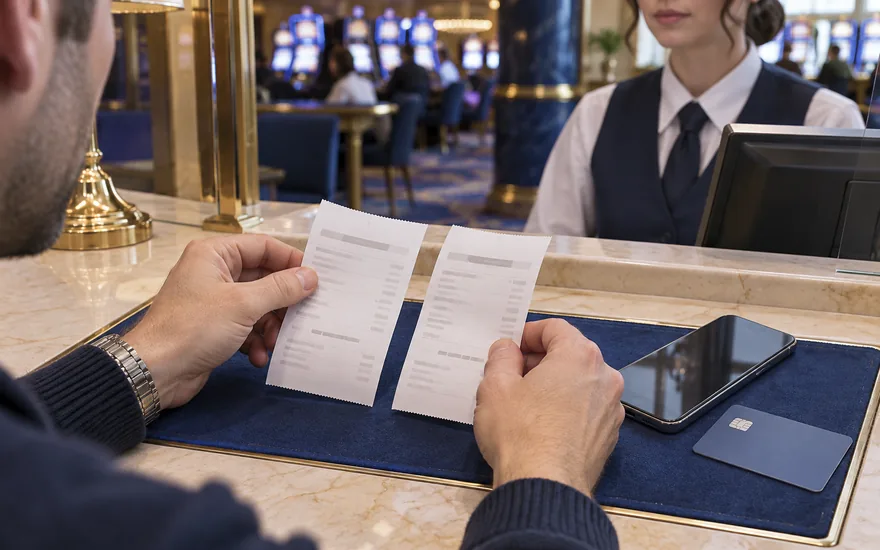
Follow a wallet through the statement boundary
A bank statement can show money entering a wallet while the merchant payment happens entirely within that wallet's history. The bank-side label therefore describes only the stage the bank sees. To understand the casino payment, retain the wallet's individual merchant record as well. Neither document alone necessarily describes the full route.
A large wallet top-up may fund several smaller merchant payments and still leave money in the wallet. Count the merchant payments for the gambling-spending record, with the top-up kept as a transfer between your own accounts. Otherwise, adding both can count the same money twice. Keep any identified charge beside the operation that incurred it so it is not mistaken for another payment or a game result.
Money moving back from a wallet to the bank may combine several incoming receipts and an older wallet balance. It need not match a single casino payout. Use the wallet's withdrawal record for the bank leg and its merchant receipts for the earlier stage. Equal totals can support reconciliation, but references and sequence explain the actual relationship.
If the bank transfer from the wallet is missing, the original casino request ID can remain background context. The useful tracing reference belongs to the wallet-to-bank instruction. Ask the wallet provider for that record rather than asking the bank to search for a merchant payment it never received directly. The guide linked to NETELLER's bank route illustrates this distinction.
Read card-backed phone payments at the underlying account
Apple Pay and Google Pay can present credentials associated with an underlying card. The bank entry therefore needs to be matched to that card account and the actual merchant instruction. The phone brand need not be the statement descriptor, and the device view should not be assumed to contain every transaction involving the account.
Where a safe device identifier differs from the physical card ending, ask the operator or issuer to explain the mapping for the particular transaction. Keep the displayed identifiers as supplied rather than editing them to match. The difference can be a legitimate part of tokenised payment handling, but it should not become an excuse to ignore a genuinely unrecognised charge.
Changing a default card affects later selections, not the history of an already authorised instruction. If a past payout is missing, retain the original card and method context even after a replacement card or device change. The operator should identify the destination it used, while the issuer can explain handling for the actual account.
If a sent card payment needs a trace, the ARN guide supplies the relevant distinction between a merchant request number and a processing reference. Confirm that the outgoing instruction was a card payment first. A wallet transfer, named account checkout or bank transfer may require another identifier despite being initiated from the same phone.
Reconcile gross and net amounts in the original currencies
A bank can show a sterling equivalent while the merchant receipt records another currency. Keep both currencies with their numbers. Comparing the nominal amounts without that context can create a false discrepancy. Ask where conversion occurred and retain the quote or account entry that explains it, rather than reconstructing the payment from a later market exchange rate.
Separate a displayed fee from the converted purchase amount where the records do so. If a difference has no identified cause, call it unexplained and ask the relevant participant. Do not assign it automatically to the bank, operator or wallet. A no-fee statement from one participant cannot establish that every other stage had no cost.
For incoming money, compare the sender's sent amount with the bank's receipt in their respective currencies. A lower numeric value can reflect conversion rather than a missing portion, but that conclusion needs evidence. Conversely, a superficially matching sterling total does not prove that the intended original-currency amount was sent. Preserve the calculation supplied for the actual instruction.
If several partial credits exist, request the sender's breakdown and match them individually. Do not combine unrelated credits simply to reach the requested total. The correct reconciliation identifies each instruction and any documented charge or conversion. That detail helps distinguish a complete return from a partially received payout with an unresolved remainder.
Make a precise security enquiry
If you cannot connect a charge to an authorised instruction, use the bank's official security or dispute channel. State what you recognise and what you do not. You might recognise the merchant but not the amount, or the amount but not the timing. Those details help the bank assess the specific entry without requiring a premature conclusion from you.
Do not contact a number embedded in an unsolicited refund message or share a code to prove ownership of the transaction. A payment trace should identify an existing instruction. A request to authorise another payment is a different action. Return to the genuine app, known website or card contact details to continue the enquiry.
Preserve relevant receipts and messages, but avoid publishing a full statement. It can disclose account numbers, address details, balances and unrelated spending. Ask the verified recipient what evidence is needed and follow its secure document instructions. A clearly labelled extract can be useful context, while the full original can remain securely held for the appropriate process.
Describe authorised activity honestly. Disappointment with a gambling result does not make the payment unauthorised. A genuine duplicate, incorrect amount or unfamiliar transaction should still be reported accurately. The bank's process determines how the specific issue is assessed; this guide explains the record distinctions rather than deciding the outcome of an individual dispute.
Use consistent account boundaries for spending totals
A bank statement records movement through one account. Money left in a wallet or gambling account can remain outside that view. A withdrawal received today may relate to deposits from another period. For that reason, a single month's incoming credits minus outgoing bank debits is not automatically a measure of gambling profit or loss.
Choose a clear period and identify the merchant payments within it. Keep movements between your own accounts under their own labels, with unsettled entries visible until their outcome is known. Attach each fee to the operation that incurred it. These choices give you a record of money committed and received that can be checked against the source entries, rather than a total shaped by whichever account view looks simplest.
If you use several bank accounts or devices, reconcile them on the same basis. A payment missing from one app may appear in another account's history. Do not open more accounts to resolve that uncertainty. Gather the existing records and connect them using identifiers. More payment paths can make an already fragmented picture harder to follow.
If the figures create pressure to recover losses through play, stop the reconciliation from becoming a reason to gamble again. The existing records can be understood without another stake or deposit. Use the support resources when the priority is control. Financial clarity should help you see the position, not provide a target to chase back to zero.
Keep the final match reviewable
For each resolved entry, retain the bank identifier, related merchant or wallet reference, amount, currency and explanation. A short note saying which records match can save a later reconstruction. Do not replace the original receipt with your own edited summary; preserve the source record and keep the commentary beside it.
Read a trace result for the event it confirms. The sender may confirm dispatch while receipt at the bank still needs checking. A processing reference can help the bank search, but it does not itself confirm a posted credit. Add the result to the original record and close only the part of the enquiry that the matching entries or a clear participant explanation have resolved.
Where the answer remains incomplete, identify the remaining gap precisely. The bank may need a different identifier, or the operator may need to identify the actual destination. Carry that specific request through the existing case. Repeatedly asking what a descriptor means can miss the deeper issue when the amount or outgoing route is still unresolved.
The enquiry should connect the bank entry to the instruction it represents. It may confirm a known payment, expose a security concern or identify another specific support task. Save that outcome with the matching details and any remaining question. The descriptor remains a clue in the record; the bank's and sender's verified information explains what happened. Another transaction would add no evidence about the entry you are trying to understand.
Keep a statement extract understandable
An extract should preserve enough surrounding context to show the entry's direction, status and currency. A cropped amount and descriptor alone can hide whether the item is pending, posted or part of another adjustment. Follow the verified recipient's document instructions and keep the full original securely. The aim is a readable transaction record, with unrelated personal activity excluded where appropriate, rather than an image that requires support to guess the missing labels.
Statement questions
Will a casino always use its familiar name on my statement?
No. Confirm the descriptor with the actual operator and bank rather than assuming one fixed label.
Is a pending debit definitely a completed deposit?
No. Read the bank's status and match the merchant's receipt separately.
Can this guide make gambling transactions invisible?
No. It explains accurate reconciliation and respects bank controls.
Sources and review
Reviewed 10 November 2026. Sources for the separate transfer stages: NETELLER bank withdrawals, Betfair standard transfers and Sky withdrawal guidance. Bank-specific display wording must come from your own bank.