 Payment

For adults using GB-facing services, the starting point is the cashier available to their own account. A generic list may describe a wallet that this merchant does not offer, or a function that the account cannot use. Check the current options before comparing providers.
On this page
- What makes a wallet different from a saved card?
- Check the wallet's country rules first
- Separate three authorisations
- Follow the costs in both directions
- Read a withdrawal as a new transaction
- Build a small record before making a comparison
- Decide whether a wallet adds useful clarity
- Draw the route before comparing wallet names
- Compare the work created by another account
- Read a comparison claim at its smallest valid scope
- Distinguish a failed payment from a missing credit
- Treat a return as an event of its own
- Keep spending totals independent of account balances
- Handle a wallet change without rewriting history
- Separate useful privacy from missing visibility
- Compare the destination you actually need
- Wallet questions
- Sources and review
What makes a wallet different from a saved card?
A stored-value wallet can hold its own balance. Paying through it changes that balance, and moving money to a bank can require a further withdrawal. NETELLER, MuchBetter and Payz documentation describes wallet-account functions, with availability depending on country and account status.
Apple Pay and Google Pay serve a different role when they present a saved debit card at checkout. A phone interface does not make the payment an electronic-money balance. Treat the card and its tokenised checkout as a card-funded route unless the actual product documentation says otherwise.
Revolut Pay also needs its own description. It is a merchant checkout option, whereas entering a Revolut card number uses the card route. Comparing names alone hides differences in authorisation, references and outgoing destinations.
| Route | Where money is held before payment | Separate question before cash-out |
|---|---|---|
| Stored-value wallet | Wallet account balance | Can this merchant return money to that wallet? |
| Saved-card checkout | Underlying card account | Which card or alternative destination receives returns? |
| Carrier billing | Charged to phone account or prepaid credit | Which non-billing route can receive withdrawals? |
| Manual transfer | Your bank account | Which account details and reference apply? |
Check the wallet's country rules first
A wallet being available somewhere in Europe does not establish eligibility for a GB resident. Account-opening restrictions can change independently of merchant acceptance. MuchBetter's support update of 9 November 2026, for example, says new UK registrations are unavailable while existing customers may continue under its terms.
Read the MuchBetter guide before treating an old comparison as current. A historical merchant logo is not proof that a new account can be opened today. Do not change residence details to get around a restriction.
For Payz, distinguish the account's contractual entity from other Payz services. Its UK payment authorisation describes the wallet service, not the gambling licence of every merchant. Our research did not establish a specific current GB casino acceptance example strongly enough to recommend one.
Follow the costs in both directions
Funding, merchant payments, currency exchange and wallet withdrawals can each have different charges. An operator saying it charges no deposit fee tells you nothing conclusive about a wallet-to-bank withdrawal or a currency conversion elsewhere in the chain.
Compare the account-specific fee quote, not a headline taken from another country. A useful note records the gross amount, fee, conversion currency and net amount. Keep the date because provider schedules and account tiers can change.
Consider a hypothetical £40 wallet balance. Sending £15 to a merchant leaves £25 before any applicable fees; receiving a later £8 payout is another transaction. Transferring the remaining wallet money to a bank is a third step, with its own conditions.
Read a withdrawal as a new transaction
First confirm that the operator offers a return to the same wallet for your account. Some cashiers impose a prior-deposit requirement or choose a different approved destination. Do not infer the answer from the list of ways to add money.
Next establish what the operator's status means. Approval, release to a payment provider and credit to the wallet are separate events. A provider's description of processing after receipt of an instruction is not an end-to-end casino payout guarantee.
Finally check whether the money needs to leave the wallet again. NETELLER's route illustrates why a merchant payout and a bank withdrawal should have separate references. Keep both if the final bank receipt needs tracing.
Build a small record before making a comparison
Write one row for each stage, with source account, destination, amount, currency, reference and status. Avoid storing passwords, full card numbers or identity documents in the same note. A record should help identify a transfer without creating a new security risk.
If a charge appears in the bank but not in the wallet, contact the funding provider with that specific reference. If the wallet shows a completed merchant payment but the operator does not, ask the operator to match that merchant record. Repeating the payment can add confusion.
Our statement-reading guide concerns the bank's external description. It cannot substitute for a provider's trace. Likewise, a casino balance alone cannot prove that a bank transfer has arrived.
Decide whether a wallet adds useful clarity
A separate wallet can make an additional balance visible, but it also creates another account to monitor. It is not automatically cheaper, faster or safer than a direct eligible debit-card payment. Judge it by the route you can actually document.
If an extra transfer or a later bill makes spending harder to follow, simplify rather than adding more accounts. The payment checklist helps compare records before funding. The support page offers a different next step when the problem is controlling spending.
Draw the route before comparing wallet names
A useful wallet comparison begins with arrows rather than a row of logos. Put your bank on the left, the wallet in the middle and the merchant on the right. Draw only the directions that current instructions actually support. A confirmed bank-to-wallet arrow and wallet-to-merchant arrow still leave the return journey unanswered. This small sketch reveals a missing destination before money moves into an intermediary.
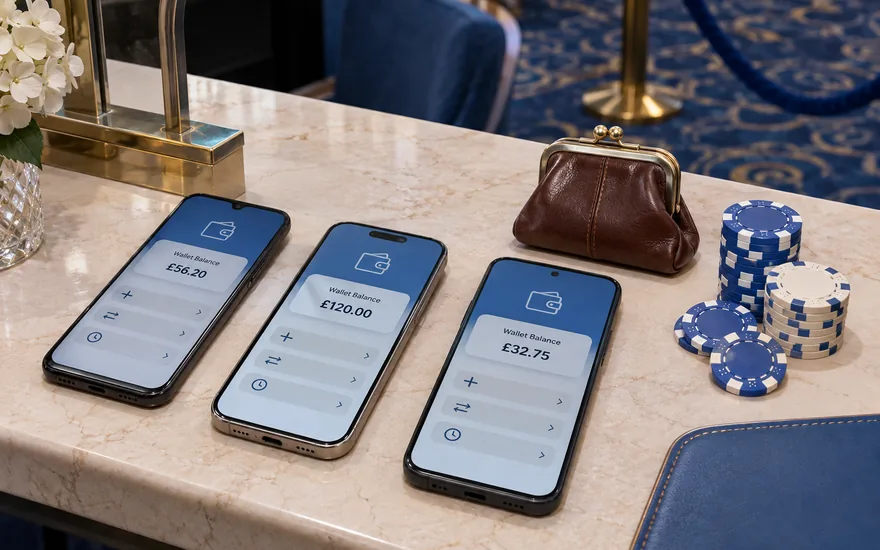
Add the currency to every arrow. A wallet can be described as suitable for sterling while one particular funding or withdrawal option uses another currency. The relevant comparison is the proposed transaction, not the range of currencies advertised for the product family. If all three accounts display GBP, record that observation without assuming it removes every possible charge.
An account-holder match and merchant acceptance answer different questions. You might own both the bank account and wallet, yet find that the merchant does not accept that wallet. Or the cashier might display the method while still requiring evidence that the account belongs to you. Check both points before approving the payment; neither can fill a gap in the other.
Suppose an existing wallet can receive a merchant payout, but its owner has not confirmed the intended personal bank destination. The money could genuinely arrive in the wallet and still remain there while the bank route is unresolved. That would complete the merchant-to-wallet transfer. Calling it a working bank withdrawal would give the reader the wrong finish point for the comparison.
Compare the work created by another account
The cost of a wallet includes the record keeping it adds. A direct card payment may involve a merchant record and an issuer record; a stored-value wallet can add funding history, its own balance, merchant transfers and a later withdrawal. This does not make the wallet unsuitable, but it changes how many records you must reconcile when something goes wrong.
Ask whether you can identify an individual transfer without reconstructing a month of activity. An account with many small funding entries and merchant payments can have the same closing balance as an account with one simple payment. The closing balance says little about the number of instructions or which one is disputed. Compare the available transaction details, rather than the neatness of the home screen.
Consider account maintenance as well. A change of name, replacement bank account or outdated contact detail can affect one participant without changing the others. Keep the relevant services informed through their own processes. A successful update in the gambling account does not prove that a wallet's ownership information or saved bank destination has also changed.
For someone who finds an extra balance difficult to monitor, this administrative work is a material disadvantage. A method is not useful merely because authorisation is convenient. It should leave spending and remaining funds understandable. If the proposed arrangement makes that harder, pause the comparison at that point instead of treating another app as a solution to uncertainty.
Read a comparison claim at its smallest valid scope
Claims such as free, fast or widely accepted are incomplete until they name a function. Free merchant payments do not necessarily mean free wallet funding. Fast transfers between two wallet accounts do not measure a casino's review. Acceptance in one country does not describe a GB account. Expand the claim into a sentence naming the participant, direction, currency and applicable account before comparing it.
This is especially useful when two sources appear to disagree. A provider might describe its receipt process while an operator describes time spent reviewing a withdrawal. Both statements can concern the same journey without measuring the same interval. The disagreement may disappear once the start and finish of each statement are written down. Do not average the numbers or choose the shorter headline.
The same discipline applies to negative claims. A method missing from one cashier does not prove that the provider has stopped serving every existing customer. A registration restriction does not automatically describe money already held. State the precise unavailable function and retain the dated answer. Broader conclusions need broader evidence than a missing button or an old discussion thread.
A blank numerical cell means that the public sources did not provide a reliable figure for the relevant account and transaction. The charge or limit still needs checking. Ask the provider responsible for that step for a current quote or an account-specific answer before deciding whether the route suits the task. Filling the gap with zero would turn missing evidence into a misleading price.
Distinguish a failed payment from a missing credit
A failed instruction and an accepted instruction with an absent merchant credit create different enquiries. In the first case, ask whether any debit or authorisation remains and what status the provider assigns it. In the second, identify the existing merchant payment and ask the recipient to match it. Starting with the visible symptom alone can send support to the wrong record.
Describe what you can actually see. For example, a bank entry marked pending, a wallet transaction marked completed and a casino balance without the expected credit are three observations. They should remain three observations until the participants explain their relationship. Changing all of them into a single statement that money has disappeared removes useful detail and can obscure which system last acknowledged the transfer.
Do not use a second transaction as a diagnostic tool. A later successful payment would establish only that the later instruction worked. It would not cancel or identify the first. If several attempts already exist, give each its own amount, timestamp and reference. Similar amounts are not evidence that the records are duplicates; they may be separate authorised instructions.
Keep the enquiry with the team handling the affected transfer until its answer explains what to do next. Wallet funding needs the funding record; a merchant payout needs the operator's sending details. If support refers you elsewhere, take the original identifier and the precise information requested. This lets the next team continue the trace instead of reconstructing the payment from a general account history.
Treat a return as an event of its own
Money returning to a wallet can represent a merchant refund, a rejected withdrawal or another adjustment. The increase in balance alone does not identify which event occurred. Look for the returned transaction's description and its relationship to the original instruction. Ask the sender to explain that relationship if the records do not make it clear.
A return does not necessarily restore the position that existed before the payment. A currency exchange may have happened, or another participant may have applied a documented charge. Do not assume a difference is a fee merely because the numbers disagree. Compare the original debit, return currency and each separately identified adjustment before deciding what requires explanation.
Suppose, purely as an accounting example, a merchant payment leaves a wallet and a later entry brings a different sterling amount back. The useful enquiry asks which original payment the entry relates to, whether conversion occurred and how the net amount was calculated. It does not begin by classifying the difference as lost winnings or an unexplained bank deduction.
Retain the return record even after the balance looks correct. It can resolve a later disagreement about whether the original transfer remained active. If you decide to use a different permitted destination, first establish whether the first instruction was rejected, cancelled or returned. A changed preference does not establish the status of an already authorised transaction.
Keep spending totals independent of account balances
A wallet balance is available money at one point in time, not a complete measure of gambling spending. Funding the wallet moves money between your accounts. Paying the merchant moves it into another relationship. Counting both as separate gambling deposits can double count the same funds; counting neither until a bank withdrawal occurs can hide the spending altogether.
Choose a consistent record of merchant payments and merchant receipts, with wallet funding and bank withdrawals recorded as transfers between your own accounts. The purpose is clarity, not a prediction of returns. Keep fees visible alongside the relevant transfer so they are not mistaken for a gaming result. A small total can still be important when it affects essential spending.
Avoid treating a wallet receipt as new disposable money simply because it arrived from a merchant. It remains part of your overall finances. Likewise, a lower wallet balance does not by itself show a gambling loss: money may have moved to a bank, paid a fee or gone to another recipient. Individual records explain those differences more reliably than memory.
If you cannot reconcile the total without making another payment, stop. Funding an account creates another entry; it does not reveal the identity of the existing ones. Use downloaded histories or provider support to explain the current position. When recording and checking become a way to stay engaged with gambling despite wanting to stop, use the support resources instead.
Handle a wallet change without rewriting history
Changing providers does not move the history of the old wallet into the new one. Keep the original records accessible for any unresolved merchant payment or bank transfer. The old provider may remain the only participant able to identify its instruction, even if you no longer intend to use the service. A new account cannot supply a missing reference for an old transfer.
Before closing or ceasing to use an account, resolve what happens to any remaining balance and outstanding transfers under that provider's instructions. This is a record-management decision, not a reason to maintain gambling access. Download the information you are permitted to keep and retain case references securely. Do not make a fresh merchant payment simply to reduce a small leftover balance.
An operator's alternative withdrawal destination needs its own confirmation. Support for the old wallet does not establish support for a new wallet, a bank account or a saved-card checkout. Ask which destination applies to the existing money and what evidence establishes ownership. The answer should identify the current balance being returned, rather than an unrelated requirement for future deposits.
Compare any proposed alternative by repeating the original route analysis. Identify where money will be held, what instruction moves it and which record proves receipt. This avoids replacing one incomplete journey with another. The objective is a documented resolution of existing funds, not collecting payment accounts or creating a succession of small test transactions.
Separate useful privacy from missing visibility
A wallet can change which name appears on a bank entry because the bank sees the wallet funding or withdrawal stage. That does not make the underlying merchant activity anonymous. The wallet can have its own merchant records, and support may need them to investigate a payment. Read the statement and wallet history together rather than expecting one label to describe the entire journey.
Privacy is best handled by controlling who can access your records and sharing only the information needed for a genuine enquiry. A full wallet history can expose unrelated merchants, balances and personal details. Ask the verified recipient which specific pages or fields it requires. Follow its document instructions while avoiding public uploads, chat-room screenshots or messages to unverified accounts.
Never confuse reducing exposure of payment credentials with removing spending controls. A provider's security features do not authorise evading a bank block, borrowing another person's account or disguising the origin of funds. If a route is unavailable because of a protective restriction, switching intermediaries changes the record without resolving the reason for the restriction.
You should be able to explain the proposed route in a few ordinary sentences: which eligible account sends the money, which merchant accepts it, where it can return, and what each step costs. Keep the supporting reference beside each step. Mark any unanswered point as unknown. Finding a gap before paying is a useful result, including when it leads you to leave the money where it is.
Compare the destination you actually need
A wallet comparison can change when the intended finish changes. Someone reading about paying a merchant needs evidence for the merchant instruction. Someone retrieving an existing balance needs evidence for the receiving bank or other permitted destination. Do not rank the wallet on a feature that belongs to a different task simply because it is easier to verify.
For example, an account may provide clear merchant receipts while its bank-transfer quote still needs to be checked. That is enough to explain a historical merchant payment, but insufficient to describe the whole route to a bank as confirmed. Conversely, a documented money-out function does not establish that a particular casino accepts incoming payments from the wallet.
Write the intended destination at the top of the comparison: merchant credit, wallet receipt or receipt in your personal bank account. Then look for the record that would confirm arrival there. List any conditions that still need an answer beside it. This gives you a practical way to judge progress when an intermediate screen shows success but the money still has another transfer to make.
The same approach avoids unnecessary account changes. If the task is locating an old receipt, another wallet cannot supply it. If the task is returning an existing balance, a new merchant deposit cannot prove the destination. Choose the reading and support enquiry that address the present instruction, with the other features left for a separate decision.
Wallet questions
Is Apple Pay the same as NETELLER?
No. A saved-card checkout and a separate wallet balance do different jobs.
Can I always withdraw through the wallet I used to deposit?
No. Check the operator's outgoing options and any prior-use requirement for that exact account.
Does an unknown fee mean the transfer is free?
No. Obtain the provider's current quotation before confirming.
Sources and review
Reviewed 10 November 2026. Sources: NETELLER fees, MuchBetter location restrictions, Payz account information and UKGC credit-card guidance.