 Payment



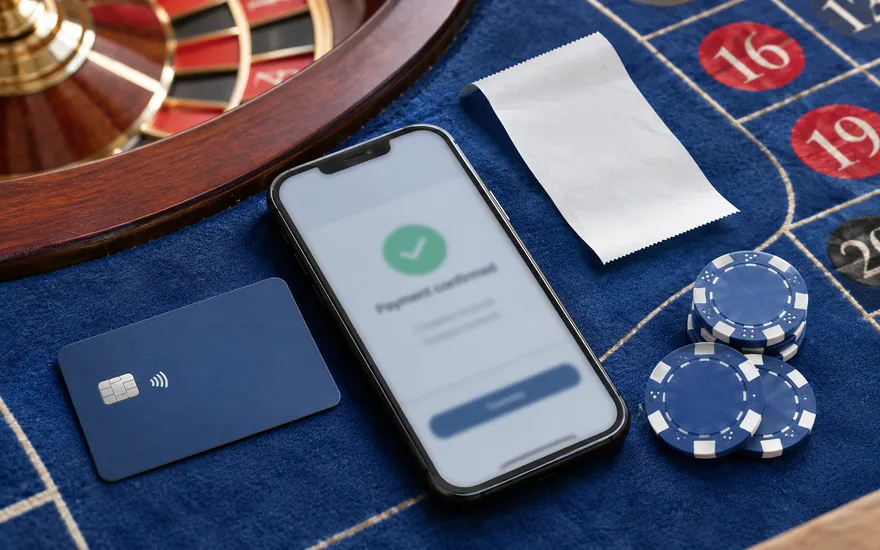

Betfair's public help lists standard bank transfers separately from Pay by Bank. Here the task is the standard manual route: entering the beneficiary details yourself, preserving the customer reference and matching the bank instruction to the operator's record. A bank-transfer payout runs in the opposite direction and needs its own receiving details and evidence of receipt.
On this page
- Get current details from the genuine cashier
- Why the reference matters
- “Sent by the bank” is one stage
- Read the payout as a separate instruction
- Minimums and costs belong to the exact service
- When an instruction looks wrong
- Send the matching reference to the right participant
- Understand the two jobs of the payment instruction
- Avoid treating saved beneficiaries as permanent instructions
- Keep the payer account and receiving account distinct
- Distinguish a standard transfer from bank-connected checkout
- Recover from a wrong reference with the original record
- Respond to a destination error directly
- Trace a bank payout from the operator to you
- Compare quotes with their actual currencies
- Preserve a complete allocation outcome
- Preserve field labels in a payment extract
- Bank-transfer questions
- Sources and review
Get current details from the genuine cashier
Beneficiary information should come from the operator's verified account channel for the correct currency. A saved email, forum post or old article can contain obsolete instructions. Do not use replacement bank details supplied by an unsolicited caller or social-media account.
Check the beneficiary name, account information, currency and reference before authorising. If the bank's recipient check raises a discrepancy, resolve it with the genuine operator rather than ignoring the warning. The purpose is to identify the destination before the transfer becomes difficult to recover.
Use an account that meets the operator's ownership requirements. A transfer from someone else's account can create a mismatch even when the account number is correct. It should not be used as a shortcut around verification or a protective restriction.
Why the reference matters
A bank can deliver money to a beneficiary without telling the operator which customer balance should receive it. The required payment reference is often what connects those records. A missing or altered reference can therefore create a matching problem rather than a bank-network failure.
Copy the exact reference from the current instruction. Do not add commentary, replace it with your username or reuse the reference from another account unless the operator explicitly says that is correct. Keep the original instruction alongside the bank receipt.
| Before sending | After sending | For a later trace |
|---|---|---|
| Correct beneficiary and currency | Bank confirmation | Bank transaction identifier |
| Required customer reference | Amount and execution date | Original payment reference |
| Current operator instructions | Operator credit record | Case number and written response |
| Ownership requirement | Any returned payment | Return reference and reason |

“Sent by the bank” is one stage
The bank's execution record concerns its own side of the payment. The operator may still need to receive, identify and credit it. A bank service advertising fast transfers does not establish the operator's internal matching time.
Ask the operator which event starts its published processing estimate. Business days, cut-off times and currency routes can matter, but do not invent an extra delay simply because a transfer uses a bank. The relevant instructions should explain the route actually used.
Avoid sending a second transfer while the first is unresolved. If the original reference was wrong, provide the bank receipt and account details through the secure support channel. A duplicate deposit can double the amount exposed without repairing the matching error.
Read the payout as a separate instruction
For an outgoing bank transfer, confirm the approved receiving account and currency. A deposit beneficiary is the operator; a withdrawal beneficiary is you. Copying the wrong side of an earlier instruction is a basic but serious mistake.
Ask whether the casino has approved the withdrawal or already issued the bank payment. Once sent, request the available payment reference. Use that identifier when the bank or operator traces the final receipt rather than relying only on the casino request number.
The bank statement can display a processing business instead of the trading name. Our descriptor guide explains how to reconcile the record. Do not classify a credit as missing solely because its visible label differs.
Minimums and costs belong to the exact service
Betfair's standard-transfer help publishes amounts for its service, while its separate Pay by Bank guidance describes another route. A limit from one must not be copied into the other. This guide does not set a GB-wide transfer minimum or completion deadline.
Check operator fees, bank charges and any currency conversion independently. A sterling account and sterling beneficiary can avoid one conversion question, but that does not establish that every stage is free. Read the bank's actual quote before confirming.
If the issue is the smallest cash-out amount, use the withdrawal-threshold article. A provider's ability to send a small bank payment does not determine the operator's published account conditions.
When an instruction looks wrong
Stop if the recipient, currency or reference differs between the cashier and a message claiming to be support. Return to the operator through a known address and ask for confirmation. Do not send a small test to prove that a suspicious beneficiary works.
Preserve evidence of an existing error without sharing full statements publicly. A redacted receipt can show the amount, date and reference while hiding unrelated entries. The bank and operator should explain which details they need through their secure channels.
Where the bank has blocked gambling as a protective measure, respect the block. A manual transfer should not be used to sidestep it. See the payment checklist for pre-payment records or support resources if stopping is the appropriate next step.
Send the matching reference to the right participant
Before sending, compare the bank's payment summary with the current cashier instruction one field at a time. The beneficiary is the recipient, while your customer reference helps that recipient allocate the money. Those fields have different jobs and should not be interchanged.
| Observed discrepancy | Preserve | Ask about the existing payment |
|---|---|---|
| Wrong or missing customer reference | Original instruction and bank receipt | Can the recipient allocate this transfer manually? |
| Bank says executed, operator cannot match | Bank identifier, amount and currency | Has the beneficiary received this instruction? |
| Money is returned | Return entry and stated reason | Which field or ownership condition caused the return? |
If you discover an error after authorising, contact your bank and the genuine operator promptly. Describe exactly which field was wrong. Do not assume that changing a saved beneficiary edits a transfer that has already been sent, or that another transfer cancels it.
A transfer from an e-wallet to your own bank starts elsewhere. The NETELLER bank-withdrawal guide follows that separate instruction after money reaches the wallet. Its provider estimate does not describe a manual deposit sent to a casino's bank account.
Likewise, a card-payout ARN is not a universal reference for bank transfers. Ask the sending participant for the identifier belonging to the actual rail. The payment guide index links those distinct record tasks without treating them as alternative names.
For comparison, Revolut Pay checkout can present a named authorisation flow, while a manual transfer asks you to enter the recipient and reference. Keep each route's limits beside its name and source. A checkout limit may describe an instruction with different conditions, so it cannot decide how much the operator accepts through the manual details supplied for your account.
When the operator resolves a matching error, keep its final credit confirmation with the original bank record. A bank receipt explains sending; the operator entry explains allocation. Retaining both avoids mistaking a later, unrelated credit for resolution of the transfer you reported.
Understand the two jobs of the payment instruction
A manual bank payment must reach the correct beneficiary and be allocated to the correct customer. Account details address the first job; the required reference often helps with the second. A transfer can therefore reach the intended recipient while the gambling account remains uncredited because the allocation information is incomplete. Treat those as different possibilities when describing a missing deposit.
Before sending, compare each field in the bank summary with the current operator instruction. Do not read the fields as one block of familiar-looking numbers. Check the beneficiary name, destination details, currency and reference separately. A correct amount does not compensate for a wrong recipient, and a correct recipient does not make an altered customer reference harmless.
Keep a dated copy of the instruction that supplied those details. It establishes what you were asked to enter, while the bank receipt establishes what was actually sent. If they disagree, the comparison identifies the specific field that needs investigation. Without the original instruction, a later saved beneficiary may make it difficult to reconstruct the difference.
Use the bank receipt to check what was sent and the operator entry to check how it was allocated. If the first exists and the second is absent, ask whether the recipient has received an unallocated transfer or needs the bank to trace delivery. Keeping both records gives support that starting point without requiring you to decide in advance which participant caused the missing credit.
Avoid treating saved beneficiaries as permanent instructions
A saved beneficiary can reduce typing, but it remains a stored copy of details entered earlier. Confirm it against current genuine instructions before another payment. An old successful transfer establishes what happened then; it does not prove the destination or reference still applies. A service can change its collection arrangement while your bank retains the older saved entry.
Customer references can also have different scopes. One might identify an account, while another might belong to a particular request. Do not infer that it can be reused because it contains your name or resembles a prior reference. Follow the current instruction and ask the operator if its meaning is unclear before sending money.
If a bank recipient check raises a discrepancy, stop and resolve it through the genuine operator channel. A message claiming that warnings are normal is not enough when its source is unverified. Confirm the actual beneficiary rather than sending a small amount to see whether it arrives. A test payment is still a real payment to the disputed destination.
If details were supplied in an unsolicited message, return to the operator independently using the known account or website. Do not use the contact details embedded in the suspicious message to verify itself. The key task is to establish the intended recipient before authorisation, when the proposed instruction can still be compared without creating another transfer to recover.

Keep the payer account and receiving account distinct
For a deposit, you are the payer and the operator's collection account is the beneficiary. For a withdrawal, the operator is the sender and your approved account is the beneficiary. The screens can look similar while the direction is reversed. Read the labels carefully instead of copying all details from the last transfer you made.
Ownership conditions concern the account used for the particular direction. A transfer from another person's account can create a mismatch even if they gave permission. Ask the operator which account-holder conditions apply. Do not substitute a family member's details to overcome an unavailable route, verification problem or protective banking restriction.
If an account is joint or its displayed name differs from your gambling-account name, seek the applicable instructions before sending. This guide cannot determine how a particular operator will assess that ownership evidence. The useful question identifies the account arrangement and asks what documentation is required, rather than assuming that a familiar surname settles it.
For an outgoing payment, verify the actual safe receiving identifier in the authenticated process. A bank you used to fund a wallet may not be the destination selected for a direct operator withdrawal. Keep the method and account context together so a later support enquiry follows the right instruction rather than a different bank relationship.
Distinguish a standard transfer from bank-connected checkout
In a manual transfer, you enter the supplied beneficiary and reference in your bank's process. A named bank-connected checkout can present a prefilled instruction for authorisation. Both involve a bank, but the preparation, references and merchant records can differ. The Betfair sources cited here deliberately separate those routes rather than treating them as interchangeable payment labels.
For each amount or processing statement, keep the exact route name and its source. A checkout minimum describes that checkout, and a description of a prefilled payment's speed leaves the manual recipient's matching process unanswered. Read the standard-transfer instructions for the manual payment you intend to send. If the route is unclear, resolve that first rather than choosing the more convenient figure.
If a help page switches between broad bank-payment language and a named product, identify which section applies to the transaction. Ask support to name the route if the account history is unclear. A bank receipt may show a transfer without explaining which merchant integration initiated it, so keep the cashier record as complementary evidence.
For an existing manual transfer, do not start a bank-connected payment merely to repair a missing reference. The new instruction would follow another route and create a separate record. Ask the operator to investigate the original bank payment using the existing receipt. A successful later checkout would not explain whether the manual transfer was received or returned.
Recover from a wrong reference with the original record
If you discover a missing or altered customer reference after sending, preserve what was actually entered. Give the operator the bank identifier, amount, currency, execution date and payer details it requests through its secure process. Ask whether it can identify and allocate the existing transfer. Do not edit your own receipt to show the reference you intended to use.
A bank's confirmation that it executed the instruction does not establish that the operator has matched it. Ask the operator whether the beneficiary received an unallocated payment or whether it needs further tracing information. Those are different responses and may require different participants. Retain the precise answer so the bank can address any delivery enquiry with the right context.
If the reference field was shortened or changed by the bank interface, describe that observation accurately. Keep the original cashier instruction and the bank's final summary. The issue is what information travelled with the payment, not whether the reference looked correct in an earlier input field. The bank can explain its handling of that particular instruction.
Do not send a second transfer with the corrected reference unless a separate, deliberate payment is genuinely intended and appropriate. It would not retroactively amend the first. The existing matching problem should be resolved against its own identifier so the eventual casino credit or return can be recognised without combining two independent amounts.
Respond to a destination error directly
A wrong beneficiary detail is different from a wrong customer reference. If the destination itself may be incorrect, contact the bank and genuine operator promptly and identify the exact field. Ask what can be done for the original instruction. Do not assume that changing the saved beneficiary redirects money already sent or that a new transfer cancels it.
Preserve any recipient-check message and the final authorisation summary. These records help establish what was displayed and approved. Avoid reconstructing them from memory or replacing the old saved details before keeping the relevant evidence. The current beneficiary screen can differ from the instruction that the bank actually executed.
The receiving account's response may involve rejection or return, but that outcome should be confirmed rather than presumed. Ask for the specific reason and reference where available. A general explanation that incorrect transfers can return does not establish the status or timing of yours. Keep any return entry separate until its relationship to the original payment is clear.
Do not send money to a person offering to recover the transfer for a fee or claiming that another payment will unlock it. Use the bank's and operator's verified processes. The existing transaction is the subject of the enquiry; approving a new recipient or sharing an authorisation code would create a different instruction and a different risk.
Trace a bank payout from the operator to you
Start with the operator's withdrawal record and confirm whether the payment was sent. An approved request may still be an internal event. Once sent, retain the amount, currency, relevant date, receiving account and available payment identifier. These details give your bank a concrete instruction to look for, rather than a generic report of missing winnings.
If the bank cannot locate the credit, ask what information it needs from the sender. Carry that precise request back to the operator through the existing case. The operator's own withdrawal ID is useful to its support team, but it may not be the identifier the receiving bank can search. Label both rather than replacing one with the other.
When a credit appears under an unfamiliar name, compare the amount, currency and reference before deciding whether it matches. A processor description may differ from the operator's trading name. Ask for confirmation if the relationship is unclear. A recognisable label is supporting evidence, not proof of receipt by itself; an unfamiliar label is not proof of absence.
Where several partial payments are involved, retain the sender's breakdown. One incoming credit may resolve only part of a request. Do not close the entire enquiry simply because some money arrived. Match each sent instruction and ask which amount remains outstanding, without inventing a fee or conversion to force the totals to agree.
Compare quotes with their actual currencies
For a sterling transfer, confirm both the payment currency and intended receiving currency. An account interface displaying a GBP equivalent can still contain a different transaction currency. Preserve the currency labels alongside the numbers so a later comparison is not made between unlike amounts. Ask the relevant participant where any conversion is performed.
Keep charges separated by owner. The operator may quote one cost, your bank another, and a conversion may have its own displayed result. A no-fee statement at one stage cannot price every other stage. If the final amount differs, request the calculation from the participant responsible instead of assigning the difference to an assumed bank fee.
An outgoing threshold is also specific to the operator and route. A bank's ability to send a small payment does not establish the casino's normal withdrawal-form minimum. For an existing small balance, ask how it can be returned without assuming another deposit or more gambling is needed. The separate minimum-withdrawal guide explains that administrative enquiry.
Set the same starting and finishing points before comparing standard transfer with another method. Bank-to-merchant and wallet-to-bank transfers involve different participants and run in different directions, even when the screens look alike. Name each complete route, then attach only its applicable amounts, charges and processing descriptions. This lets you see any extra funding or withdrawal step that the comparison would otherwise leave out.
Preserve a complete allocation outcome
A resolved manual deposit has both a bank-side instruction and an operator-side outcome. Keep the credit confirmation or explained return with the original receipt. This avoids mistaking a later unrelated credit for resolution. The final note should identify which transfer was allocated and any difference in amount or currency that support explained.
For a returned payment, retain the return entry and reason. A higher bank balance is not enough to identify it, especially after other activity. Ask how it relates to the original instruction and whether any separate charge or conversion affected the amount. The explanation should come from the relevant records rather than from a guessed net calculation.
If the case remains open, write one sentence describing the gap. For example, the bank confirms execution while the operator has yet to allocate the payment. Or the operator confirms sending while the receiving bank needs another identifier. Keep the relevant reference beside that sentence. It gives the next support response a defined task instead of another broad report that the money is missing.
Pause gambling while the committed amount remains uncertain. Use the manual transfer's existing instruction and receipt to establish where the money went, which reference travelled with it and whether the recipient allocated or returned it. Another payment adds another amount to reconcile. The enquiry can be completed from the original records, and a blocked route should remain blocked while you seek an explanation.
Preserve field labels in a payment extract
When copying a bank receipt into private notes, keep beneficiary details, customer reference and bank transaction identifier under their original labels. An unlabelled list of numbers can be difficult for support to interpret. The labels explain which value identifies the recipient, which helps allocation and which locates the bank instruction. This makes an existing transfer easier to trace without exposing unrelated statement activity.
Bank-transfer questions
Is manual bank transfer the same as Pay by Bank?
No. This guide concerns manually entered beneficiary instructions rather than a bank-authorised checkout.
Does the bank receipt prove the casino credited my balance?
No. It proves a bank-side event; the operator must identify its own receipt and credit.
Should I repeat a transfer with the correct reference?
Not as a first response. Ask the operator to trace the existing payment before sending more money.
Can I use an ARN to trace a manual bank transfer?
An ARN concerns a card-processing reference. Request the identifier for the bank transfer actually sent.
Does editing a saved beneficiary repair a transfer already sent?
Do not assume so. Contact the bank and recipient about the original instruction and the specific field that was wrong.
Sources and review
Reviewed 10 November 2026. Betfair standard bank transfer and separate Pay by Bank guidance. Search results for broad bank-transfer queries often mix these rails; no universal timing claim is made.