 Payment



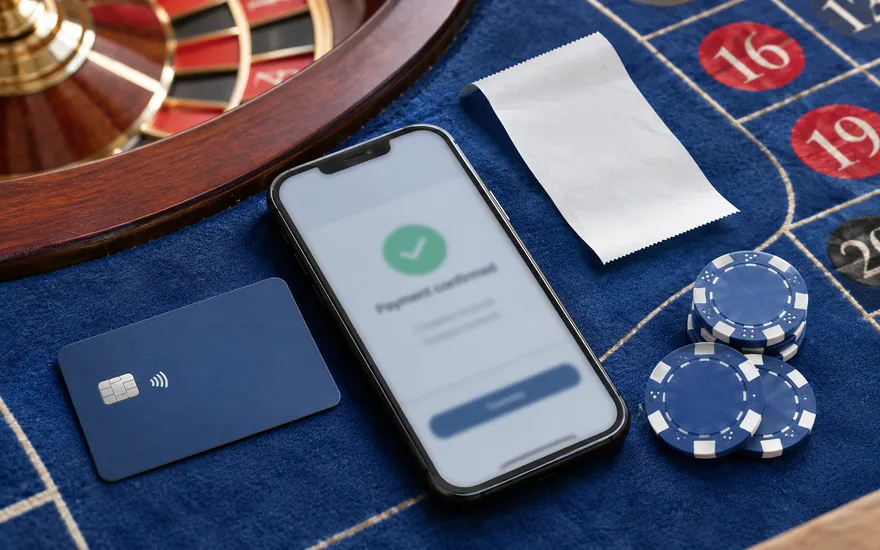

The same product name can appear on several transfers. Funding a wallet, paying a merchant and moving the wallet balance to your bank are different instructions. Start with the source and destination, then retain the reference belonging to that particular movement.
On this page
- Which wallet account are you reading about?
- Which phone or bank checkout is actually used?
- Are you following money out or locating a record?
- How should you use the supporting reading?
- Choose a guide by where the money is now
- Start with the wallet hub when a balance sits between accounts
- Use the phone-checkout guides for saved-card instructions
- Use Revolut Pay for the named account-connected checkout
- Use phone billing only when the carrier account is charged
- Use manual bank transfer for beneficiary and reference entry
- Move to outgoing-record guides after the rail is confirmed
- Separate threshold enquiries from missing-payment enquiries
- Use statement reading to connect the external record
- Build one support enquiry around one instruction
- Read the index as an explanation of evidence
- Stop reading when the next task is clear
- Sources and review
Which wallet account are you reading about?
The wallet guides distinguish the provider's account from a merchant's acceptance. A service existing in the UK does not establish that a particular casino currently supports it for your account. The guides identify public examples where documented and state where acceptance evidence remains incomplete.
| Guide | Specific task |
|---|---|
| NETELLER merchant payments | Separate wallet funding, merchant payments and incoming wallet receipts |
| MuchBetter existing accounts | Read the current UK registration boundary and merchant stages |
| Payz and older ecoPayz references | Distinguish the account contract from current merchant acceptance |
Check eligibility before moving money into an intermediary. A payment logo in an older article cannot guarantee that a current checkout or return route exists. Keep the account-specific answer alongside the date and named function it describes.
Which phone or bank checkout is actually used?
Apple Pay and Google Pay generally present saved-card credentials; carrier billing charges an eligible mobile account instead. Revolut Pay is a named checkout, distinct from using a Revolut debit card in a card form. A manual bank transfer has its own beneficiary and reference instructions.
| Guide | Distinction to resolve |
|---|---|
| Apple Pay | Device credential, underlying debit card and supported outgoing route |
| Google Pay | Deposit authorisation versus a separately confirmed payout destination |
| Revolut Pay | Named account-connected checkout versus a debit-card payment |
| Phone-bill payments | Carrier charge versus a card payment made on a phone |
| Manual bank transfer | Current beneficiary details and the exact customer reference |
Use each guide for its own product rather than copying one route's limits into another. Even two buttons on the same cashier can identify different payment instructions. The participant supplying a fee or timing statement should remain visible when that statement is compared.
Are you following money out or locating a record?
The NETELLER-to-bank walkthrough starts with money already in the wallet. It describes the provider's steps for a personal bank withdrawal, ownership review and record keeping. It does not replace the earlier enquiry about a casino payout reaching the wallet.
The card-payout ARN guide addresses a different task: identifying and requesting the processing reference for a sent card payment. It separates that identifier from the casino's request ID and explains why an issuer needs a matching amount and currency.
If you cannot yet name the route, write down what each participant has actually confirmed. Requested, approved, sent and received describe different events. A balance screenshot can be useful context, but an individual transaction record is better evidence of a particular instruction.
How should you use the supporting reading?
Alongside these ten method and outgoing-record guides, the publication has separate reading on statement descriptions, amount thresholds and game rules. Use the page whose heading matches the problem in front of you. A statement label, a rejected small withdrawal and a game settlement each need different evidence; reading them as one payment question can leave the relevant record overlooked.
When comparing costs, retain the source, date and scope of each quote. An operator's no-fee statement concerns that operator's line; it does not automatically price the wallet, bank or conversion stage. Where no verified number exists, the guides explain which record supplies the answer.
All examples come from public documents and editorial analysis. They do not report funded-account tests or a personal transaction. The editorial method explains that boundary and how source dates and uncertain facts are handled across the publication.
Choose a guide by where the money is now
The most useful starting point is the current location of the money. If it is still in your bank and you are reading about a proposed payment, focus on eligibility, recipient and return destination. If it is already in a wallet, identify the wallet's particular transfer. If an operator has sent a payout, follow the outgoing rail and receiving record.
Locating the money tells you which part of the journey needs attention. A casino payout may already be in NETELLER while the later bank withdrawal has yet to begin. A phone-backed card deposit may be authorised while its outgoing destination remains unconfirmed. In either case, start with the guide for the unresolved event and the record that can confirm it, rather than treating the product name as the whole route.
For a missing entry, write down the last event a participant has confirmed. A requested withdrawal, an approved request, a sent payment and a posted receipt are different events. The next guide should address the gap between the last confirmed event and the expected next one. Do not assume a delay belongs to the provider whose logo is most visible.
You can use the index without planning a new payment. It is equally useful for identifying an old transaction, understanding a changed method or preparing a support enquiry. The intended result is a clearer account of existing money, not a recommendation to register with another service or make a small deposit to test a route.
Start with the wallet hub when a balance sits between accounts
The wallet hub explains a stored-value account as a separate balance. Read it when you need to distinguish bank funding, a merchant payment, an incoming payout and a later transfer out. These stages can share the wallet name while producing different references and conditions. Comparing the complete route is more useful than comparing only the deposit logo.
Then move to the named provider. The NETELLER guide follows merchant and wallet records, while the separate bank-withdrawal walkthrough begins after money is already in NETELLER. The MuchBetter guide starts with the existing-account boundary described in the provider's notice. The Payz guide preserves the distinction between wallet documentation and unconfirmed merchant acceptance.
Do not use the strongest acceptance example from one provider to fill an evidence gap for another. A merchant listing NETELLER does not establish Payz participation. An existing MuchBetter account does not prove that a particular casino offers that wallet today. Each guide keeps the account contract, merchant direction and account-specific availability separate because they answer different decisions.
If the wallet adds complexity you cannot reconcile, pause before funding it. A separate balance can provide another visible record, but it also introduces another account and possible transfer-out step. The hub helps assess that administrative work without promising that an intermediary is cheaper, faster or more suitable for a particular person's finances.
Use the phone-checkout guides for saved-card instructions
Apple Pay and Google Pay describe card-backed checkout contexts. Read them when the merchant presents a named payment sheet using a saved card. Merely browsing on a phone or typing a card number on Android does not establish which checkout was used. The method label and authorisation record identify the instruction more reliably than the handset.
The selected debit card remains important to ownership, currency, restrictions and the bank-side record. A device can present a credential that does not display identically to the physical card number. The guides explain why a safe identifier needs matching rather than guessing. They also preserve the separate question of the operator's supported outgoing destination.
Do not infer a stored cash balance from a wallet icon. The saved-card route and a provider holding an independent balance have different accounting boundaries. A payout should be followed to the actual receiving card or approved alternative named by the sender. A Google Pay deposit example cannot establish a universal receiving facility, and an Apple Pay implementation at one operator cannot define every other operator's process.
For a missing card credit, establish that the outgoing instruction was actually a card payment before moving to the ARN guide. The original phone checkout supplies context, but it does not determine every later rail. The operator's sent record and the issuer's receiving record should identify the practical tracing task.
Use Revolut Pay for the named account-connected checkout
The Revolut Pay guide addresses the named merchant option, rather than every payment involving a Revolut account. A Revolut debit card entered into a card form remains a card route. The same card saved in another checkout does not become Revolut Pay merely because the issuer is Revolut. Preserve the actual method name with the transaction.
The documented Sky example supplies a narrow GB and GBP context. Its figures belong to that service at the review date and remain subject to account conditions. Use the example to understand which boundaries to check, rather than treating it as a market-wide fee schedule or a reason to spend towards a published maximum.
For an existing payout, ask the operator which outgoing product it used. Paid to Revolut can be too broad: a card payout, bank payment and named checkout instruction can need different identifiers. The guide helps keep the support case tied to the actual route. A request for an ARN should follow confirmation of a card instruction, not the brand name alone.
The protective-control discussion also belongs to the route analysis. A different button should not be used to evade a gambling block or other restriction. Where existing funds need returning, ask the operator for a permitted destination and keep the explanation in the authenticated case. No new payment is required simply to understand the old instruction.

Use phone billing only when the carrier account is charged
The pay-by-phone guide concerns carrier billing: a charge reaching an eligible mobile account or prepaid balance under the relevant arrangement. It is not a general guide to every payment made on a handset. Identify the account being charged, the merchant arrangement and the current plan conditions before using the carrier-billing label.
For carrier billing, check both the merchant arrangement and the plan's current rules. Boku's documentation explains the mechanism and network context, but its coverage information cannot confirm that a particular customer's plan permits a gambling charge. The phone-billing guide leaves generic GB limits and plan lists unquoted for that reason. The operator and relevant billing participant need to provide the applicable account-specific answer.
A later bill also changes the record-keeping task. Record the spending when authorised and reconcile the bill line later, rather than treating the final payment of the whole bill as another casino deposit. The authorisation date, billing date and bank settlement can describe different stages of the same commitment. Keep them labelled to avoid overlooking or double counting the amount.
Carrier billing should not be assumed to provide a cash withdrawal wallet. The approved outgoing destination needs a separate answer before a charge is made. For an existing balance, follow the operator's actual withdrawal instruction and use the reference for that outgoing route. The original phone confirmation does not trace a later bank or card credit by itself.
Use manual bank transfer for beneficiary and reference entry
The bank-transfer guide concerns instructions entered using a beneficiary and customer reference. It separates that process from named bank-connected checkout products. Read it before using current cashier details, when an operator cannot allocate a transfer, or when you need to understand the bank-side evidence for an existing manual instruction.
Two jobs need to be completed: the money must reach the correct recipient and the recipient must identify the right customer. A bank execution receipt can confirm its own event without proving that the operator credited the gambling account. A missing reference can therefore be a matching problem even when the beneficiary details were correct.
If an error is discovered after sending, use the original receipt and contact the relevant participants about that instruction. Changing a saved beneficiary does not establish that money already sent was redirected. Sending another transfer with a corrected reference does not amend the first. The guide explains how to keep the specific incorrect field and existing identifier central to the enquiry.
For a withdrawal, reverse the direction carefully: the beneficiary should be the approved receiving account rather than the operator's deposit collection account. Keep the operator's request ID and available bank-transfer reference separately. A card-processing ARN should not be demanded simply because the missing payment eventually belongs in a bank account.
Move to outgoing-record guides after the rail is confirmed
The NETELLER bank-withdrawal walkthrough starts with an existing wallet balance and follows the provider's personal bank route. Read it for the Money out process, ownership review, quote, history record or a returned bank withdrawal. It does not replace the preceding enquiry about whether a casino sent and credited money into the wallet.
The withdrawal ARN guide starts with a sent card instruction where a processing reference may be available. It distinguishes the operator's internal request number from an identifier the issuer can use. It also explains why refund documentation should remain within its own scope instead of becoming a universal casino payout deadline.
Although both enquiries can finish with money in a bank account, follow the instruction the sender actually used. A card payout needs its card-processing reference where available; a NETELLER bank withdrawal needs the reference for that bank transfer. Ask the sender to identify the route first. The final location alone cannot tell support which system to search or make a card term apply to a wallet transfer.
Where the sender cannot yet confirm dispatch, remain with the operator-status enquiry. A reference request should not distract from the more basic gap. Conversely, once receipt is established, do not keep treating the operator's original request as missing because a later wallet-to-bank transfer is unresolved. Close each stage against the evidence for that stage.
Separate threshold enquiries from missing-payment enquiries
The minimum-withdrawal guide explains a form or route refusing a small amount and how to ask about returning existing funds. That is different from an accepted request under review or a sent payout awaiting receipt. The next useful action depends on which event occurred, so keep the error message, request status and sent confirmation distinct.
A deposit minimum, game stake and wallet bank-transfer floor cannot supply the operator's outgoing threshold. Each number belongs to a different function. Read the currency and method alongside it. Where a balance is below a normal form minimum, ask for the applicable return procedure rather than treating another deposit or more gambling as an automatic requirement.
If the operator already sent the money, the threshold may no longer be the issue. Identify the outgoing rail and follow its record. The minimum-withdrawal article can supply context, but it cannot locate a bank entry or validate an ARN. A focused support enquiry should ask about the stage still unresolved rather than combine every withdrawal concern in one general message.
When comparing alternatives, include eligibility and expected net receipt alongside the floor. A lower number is not useful if the destination is unsupported or introduces another unconfirmed transfer. Keep the current account-specific answer with the quote. The index provides reading routes, not a reason to open an additional payment account solely to reach a headline threshold.
Use statement reading to connect the external record
The bank-statement guide deals with the external bank entry: its direction, amount, currency, dates, description and available identifiers. Read it when a label is unfamiliar, a pending entry appears alongside a posted payment, or a wallet transfer needs to be distinguished from the merchant activity inside the wallet.
A descriptor is one clue, not the full identity of a transaction. A familiar name does not prove an unexpected charge was authorised, and an unfamiliar name does not prove a known payout is absent. Match the transaction details and ask the actual bank or sender to explain the relationship. Avoid relying on an unverified telephone number found beside a search result.
The article also separates spending totals from account movement. A wallet top-up and a merchant payment using that balance are not two new deposits of the same money. A released authorisation and a new payout can both increase available funds while representing different events. Accurate labels prevent the reconciliation from turning every visible line into a separate settled transaction.
If a charge remains unrecognised, use the bank's verified security process. Do not publish a full statement to obtain identification of the descriptor. The guide's purpose is accurate reconciliation, including genuine errors and security concerns. It does not advise changing how transactions appear or routing payments around protective controls.
Build one support enquiry around one instruction
Across all of these routes, a concise case record starts with the actual method, amount, currency, relevant date, identifier and observed status. Include the expected next event and the participant's latest answer. This is more useful than a current balance screenshot alone because the balance may contain many unrelated transactions and adjustments.
Describe what each participant shows before assigning a cause. If one system records a completed debit and another has no matching credit, give support those details and the same transaction identifier. Ask which event was last confirmed and what evidence is needed next. This provides an investigation it can carry out, without depending on assumptions about a product's reputation or how quickly payments usually arrive.
If several attempts exist, keep them separate even when their amounts match. A later successful payment does not settle earlier entries. If an instruction is replaced, returned or split, retain the sender's explanation and the related references. The case should show the relationship rather than combine everything into one missing balance.
Use authenticated channels and provide only the information needed under the recipient's document instructions. Passwords and approval codes are not tracing evidence. When another participant needs a different reference, carry its precise request back to the sender. A clear handoff can resolve more than another broad message asking where the money has gone.
Read the index as an explanation of evidence
The linked guides use public documentation and conditional editorial examples. They do not report funded-account testing, personal payment success or a verified list of suitable casinos. A named operator example demonstrates what that source says within its scope. It does not establish that a method is available to every reader or that a different merchant applies the same conditions.
Fees, limits and processing language remain attached to their owner and function. If a reliable applicable figure is unavailable, the guide explains where to obtain it rather than inserting a guessed number. Unknown is a meaningful result when it prevents an unsupported comparison. It does not mean free, unlimited or guaranteed to complete quickly.
Use the editorial policy for the publication's approach to evidence and corrections. Keep the source date with any statement that may change, then consult the current provider or authenticated account for a personal decision. The index organises the evidence; it cannot replace the account-specific instruction that authorises or identifies a real transfer.
The most useful reading path ends when the money route and remaining task are clear. It need not end with another payment. If several accounts or delayed bills make spending hard to follow, pause authorisations and reconcile the records already held. The support resources provide another next step when the concern is controlling gambling rather than tracing an instruction.
Stop reading when the next task is clear
Once you know the source, destination and unresolved event, open the guide for that task and keep the relevant record beside it. There is little benefit in reading more product comparisons while a support team is asking for a particular identifier. Follow that concrete request. Return to the index if the sender confirms a different route or the enquiry moves to another stage with its own evidence to check.
Sources and review
Reviewed 10 November 2026. This publication index organises the linked guides and their individual source lists. Product boundaries are supported by NETELLER bank instructions, MuchBetter's location notice, Sky Revolut Pay guidance and Boku carrier-billing information.